
AIR CONDITIONING · NEW ORLEANS
You hear the system running, but the rooms do not feel cooler. In New Orleans, heat and humidity can make that change uncomfortable quickly. A running fan or outdoor unit does not prove that the air conditioner is moving enough air or removing heat as it should.
Start with simple observations, not repairs. A thermostat setting, blocked return, or overdue filter may be within reach; ice, water near equipment, unusual sounds, or a suspected refrigerant problem call for a professional. This guide explains what you can safely check and what those checks cannot diagnose.
First, check the thermostat and the system’s mode
Confirm the thermostat is set to Cool and the temperature setting is below the room temperature. Set the fan to Auto if that is your normal setting. If the display is blank or settings changed, consult the thermostat manual and restore your usual schedule. Smart controls can be in an away, hold, or schedule mode that differs from what you expect.
Give the system a little time to respond. The displayed room temperature may not match every room. These checks can rule out a simple control issue, but they cannot confirm the equipment is cooling. If warm air continues, note vent airflow and whether the outdoor unit appears to operate normally.
Check the filter and unobstructed airflow
A clogged filter can slow airflow, reduce comfort, and make equipment work harder. ENERGY STAR recommends checking filters monthly during heavy-use seasons and changing a dirty filter; at minimum, it advises replacement every three months. Follow filter size, direction, and replacement instructions.
Make sure supply registers and return grilles are not covered by furniture, curtains, or stored items. Inspect accessible grilles without removing panels or reaching into equipment. A clean filter and open grilles do not prove duct airflow is adequate. For HVAC maintenance, see prevention guidance; persistent weak airflow may need a professional AC repair assessment.
Notice where cooling is weak—and what is around the unit
If only one room is warm, compare it with nearby rooms and check that its register is open and return path is clear. If the whole home is warm, note whether airflow feels weak or normal. Uneven comfort can relate to duct leakage, airflow balance, insulation, sun exposure, or equipment operation; a quick look cannot identify which.
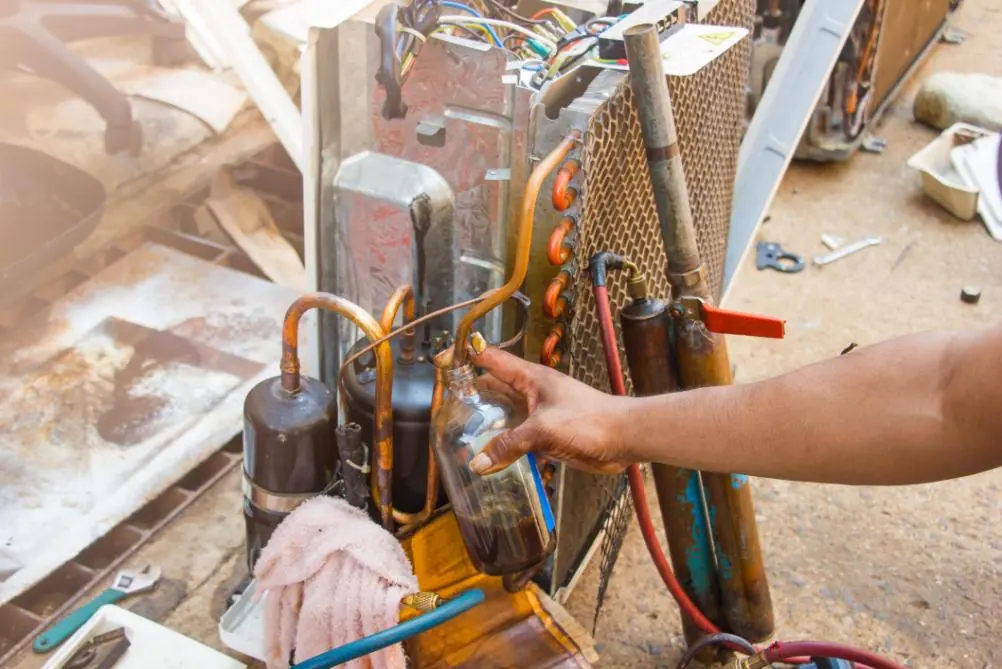
From a safe distance, check whether leaves or objects crowd the outdoor unit. Keep the area clear, but do not open its cabinet, spray components, or clean internal coils. ENERGY STAR notes dirty evaporator or condenser coils can reduce cooling performance; inspection and cleaning are service tasks. Humidity and comfort can also be affected by indoor air quality factors.
If you see ice, stop cooling and let it thaw
Frost or ice on refrigerant tubing or an indoor coil is a warning, not a cue to scrape it. Restricted airflow and equipment or refrigerant problems can contribute to icing. If you see ice, turn cooling off. Use a separate fan-only setting only if the manual permits and there is no electrical concern; otherwise leave the system off.
Do not use a hair dryer, sharp tool, or heat source. Ice takes time to melt, and water can collect. Arrange professional diagnosis rather than repeatedly restarting the system. A thawed coil does not reveal why it froze, and changing the filter may not resolve an underlying fault. For heat pump systems, consult a technician familiar with heat pump repair.
Treat water, shutoffs, and electrical symptoms cautiously
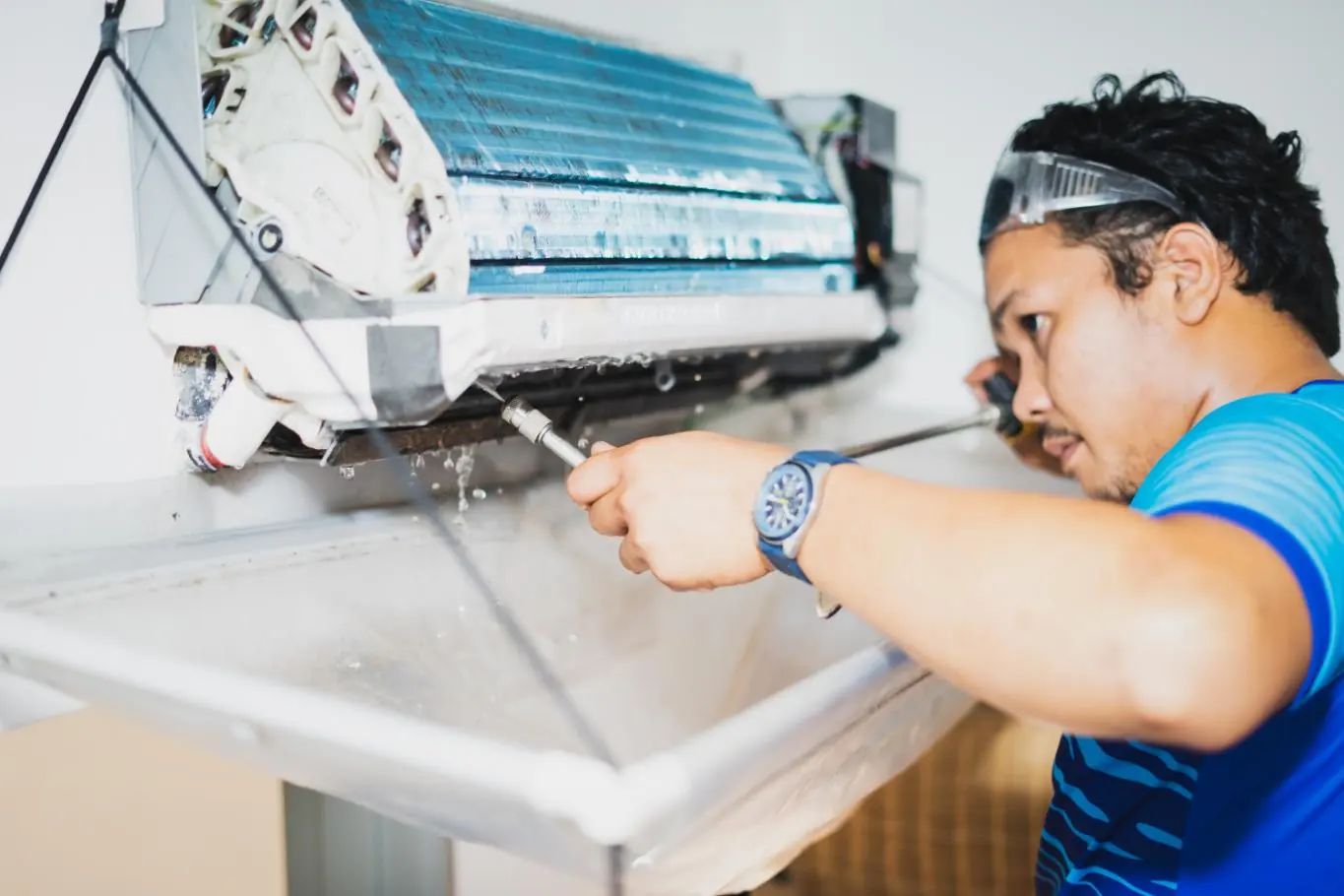
Some systems have a condensate safety switch that stops cooling when a drain backs up. Water near an indoor unit, a full drain pan, or a shutdown may point to drainage, but does not identify the cause. ENERGY STAR includes drain inspection in professional maintenance because a clogged drain can cause water damage.
If water is leaking, protect nearby belongings if safe and stop cooling if equipment appears to overflow. Do not remove access panels, handle wiring, bypass a float switch, or pour chemicals into a drain. With burning smells, sparking, smoke, or unusual electrical noise, keep away and stop operating the equipment. A shutoff can signal a protective response, not a switch to defeat.
Refrigerant and mechanical faults need diagnosis
Low refrigerant is not a routine consumable condition. A leak may impair cooling, but warm air alone cannot confirm it. Other possibilities include a dirty coil, blower or compressor fault, control problem, or duct issue. Diagnosis requires appropriate tools and training; homeowners should not connect gauges, add refrigerant, or open the refrigerant circuit.
EPA advises homeowners to ask service technicians to locate and repair a refrigerant leak rather than simply topping off a leaking system. EPA Section 608 rules restrict service work that could release regulated refrigerants; leave that work to a professional. If simple checks fail, ice returns, a safety shutoff trips, or water or unusual sounds persist, stop troubleshooting and arrange AC repair. Maple Wrench serves Uptown and Mid-City.
MORE CLARITY
Common questions
01Why is my AC running but blowing warm air?
A thermostat setting, dirty filter, blocked airflow, frozen coil, drain safety shutoff, or mechanical fault may be involved. Warm air alone cannot identify the cause; check only basic settings and visible airflow obstructions.
02Can a dirty air filter make my AC stop cooling?
Yes. A dirty filter can restrict airflow and reduce comfort. Check it monthly during heavy use and replace it when dirty, following the system and filter instructions. Continued problems need diagnosis.
03What should I do if my AC coil is frozen?
Turn off cooling and let the ice thaw; do not chip it or apply heat. If cooling remains poor or ice returns, leave the system off and arrange professional diagnosis.
04Can I add refrigerant to my home AC myself?
No. Do not connect gauges or add refrigerant. EPA rules restrict refrigerant service, and a leak should be located and repaired rather than merely topped off.
05Can a clogged AC drain stop the system?
Some systems use a safety switch that interrupts cooling when condensate drainage backs up. Water or a shutoff does not prove the cause; do not bypass the switch or open equipment.